

Choosing lenses
Choosing lenses isn’t always easy, so here is a guide to what is worth thinking about. If you feel unsure or would like someone to talk it through with, you are very welcome to get in touch. We love lenses and all the possibilities they offer for creating a truly unique pair of glasses.
Call or email us. We’re here for you!
+46 8 642 23 22 or info@hultinsoptik.se
Need help reading your prescription?
You’ll find our guide here.
1. What type of lenses do you want?
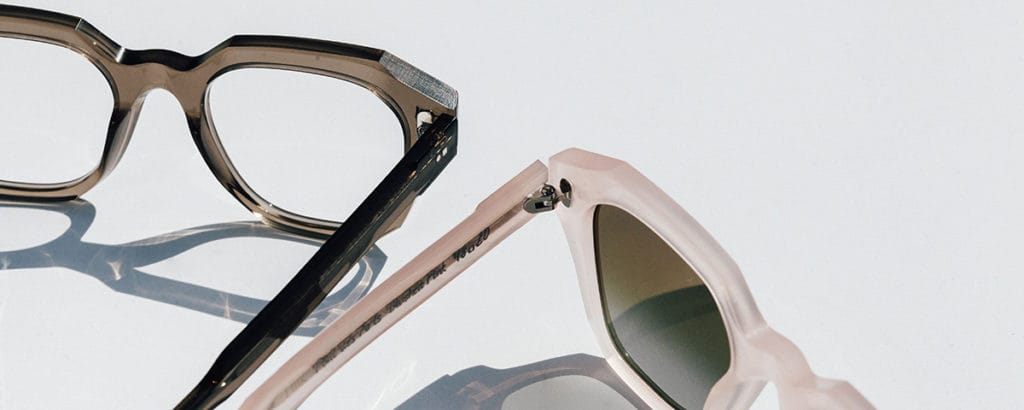
The first thing to decide is what type of lenses you want in your new glasses. What function, feel & attitude are you after?
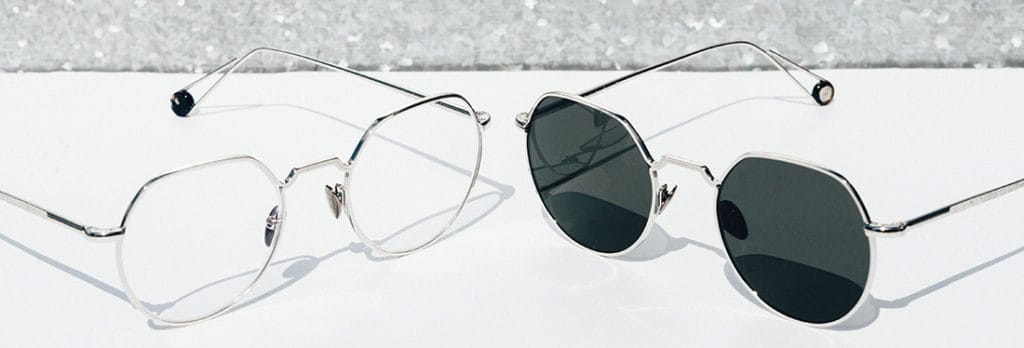
We have divided our lenses into clear lenses, photochromic lenses, gradient lenses and sun lenses. For the best overview, we recommend using the filter in our online shop.
Clear lenses
Clear lenses are the most common and are exactly what they sound like: clear. Here it is worth thinking about how you use your glasses. If they are mainly reading glasses, a simpler coating may be all you need. If, on the other hand, you live a constantly connected life with lots of screen time, lenses designed for our digital lives may be the better choice. Either way, clear lenses are for you if you don’t want any tint or colour in your lenses.
Photochromic lenses (Transitions)
Photochromic lenses adapt to the light. The brighter it is, the darker the lenses become. Perfect if you have light-sensitive eyes or simply don’t want to carry an extra pair of sunglasses. They come in different levels of how dark and how light the lenses get. Think about how you will use your glasses and how dark you want them to become.
Tip! Remember to choose a frame that looks good both as “sunglasses” and as everyday “glasses”.
Gradient lenses
Gradient lenses are darker at the top and gradually become lighter towards the bottom. They have become very popular recently, adding a little extra attitude to the frame while giving the lenses a relaxed tint. In our online shop we have selected the most popular options, but if you like, we can tailor-make lenses in many different colours and tints. Get in touch and we’ll sort it out.
Sun lenses
Sun lenses hardly need an introduction. Perfect if you want your prescription in your sunglasses. They come in different colours and are a good alternative if, for example, you’d rather not wear contact lenses. We can also fit prescription sun lenses in both sunglass frames and optical frames, which gives you a much wider choice of frames.
2. Which lenses suit my prescription?
If you have a stronger prescription, it is a good idea to choose a higher refractive index. The standard is 1.5; choosing 1.6 instead makes the lenses about 30% thinner, and choosing 1.67 makes the same prescription about 50% thinner by comparison.
By a stronger prescription we mean above +3.0 or below -3.0. You can of course choose a higher index for weaker prescriptions too. The lenses will then be lighter, slightly thinner and made of a tougher material, but the difference is not as great as for stronger prescriptions.
- If your prescription is between -3.0 and +3.0, choose index 1.5 or 1.6.
- If your prescription is beyond -3.0/+3.0, choose index 1.6 or 1.67.
The stronger the prescription, the bigger the difference in lens thickness.
Every order placed in our online shop is reviewed by a registered optician. If we notice anything unusual or anything that won’t turn out well, we will contact you. You can rest assured that we will deliver your product to the highest quality. All lenses are cut and fitted in our own workshop in Södermalm, Stockholm.
3. Which lens coatings do I need?
The simple answer is “the best”. The coating is a very large part of the lens and of how you will live with and experience it. That is why we have chosen to include the best coating on all our premium lenses.
We have all seen photos of people whose eyes can barely be seen behind their frames. Those people have a poor coating on their lenses, which causes lots of reflections. Cosmetically it doesn’t look good, since you can’t see their eyes properly, but more importantly the wearer doesn’t get a sharp image through the lens (leading to tired eyes). The best coatings have several layers that make the surface as resistant to dirt, dust and scratches as possible. The surface is also water-repellent and has built-in UV protection comparable to SPF 35.
On many of our lenses you can also add a blue light filter at no extra cost. It protects your eyes from harmful blue light, which is good if you spend a lot of time in front of a screen. Worth knowing: the lenses may then get a very slight yellow tint.
What makes an expensive lens different from a cheaper one?
- The resolution of the lens: better optics for sharper, more natural vision
- Features (e.g. photochromic, or designed for a connected life)
- Coatings that make your lenses more scratch-resistant, repel dirt, water and dust, and remove annoying reflections.
- UV protection for your long-term eye health
- Thinner, lighter and more elegant lenses, so that you don’t just see well but look good too